
Step-by-Step Guide to Planning Your First Paella Party
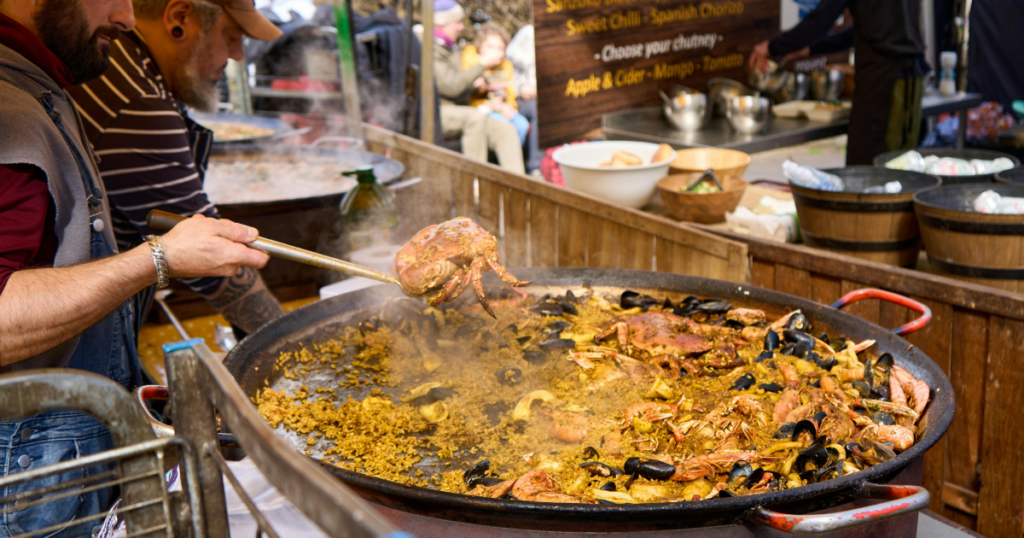
Most catering happens behind the scenes. A live paella setup puts the cooking front and center and turns dinner into entertainment.
A Paella Party combines chef-driven catering with a social focal point for your event.
This guide walks you through planning your first Paella Party step by step.
What to Know (& Consider) Before Planning a Paella Party
A Paella Party is more than a menu choice. It changes how you plan space, timing, staffing, and guest flow. Understanding these factors early helps you avoid last-minute surprises and design an event that feels intentional instead of improvised.
Live Cooking Becomes Part of the Event Design
Paella is cooked in large pans on-site, usually outdoors. This means you need space for the cooking station, guest circulation, and safety buffers. The live cooking also becomes a focal point, so plan seating and mingling areas around it. Guests will gather, watch, and ask questions. That interaction is part of the experience.
Guest Count Drives Equipment and Service Decisions
Paella works for small dinners and large festivals, but the setup changes with scale. A 30-guest backyard Paella Party might use one pan and a small team. A 300-guest corporate event may need multiple pans, buffet stations, and a service crew. Your guest count determines pan size, staffing, and serving style.
The Experience Feels Premium Without Being Formal
Paella delivers high perceived value because guests see fresh ingredients and the cooking process. You can keep the service casual with buffet bowls or elevate it with plated courses for weddings. This flexibility makes it ideal for birthdays, private dinners, corporate events, and wedding receptions.
Cultural Context Adds Storytelling Value
Paella comes from Valencia, Spain, and was traditionally cooked outdoors for gatherings. You can lean into this story with Spanish-inspired tapas, wine pairings, or décor. It adds authenticity without complicating logistics.
Step-by-Step Guide to Planning Your First Paella Party
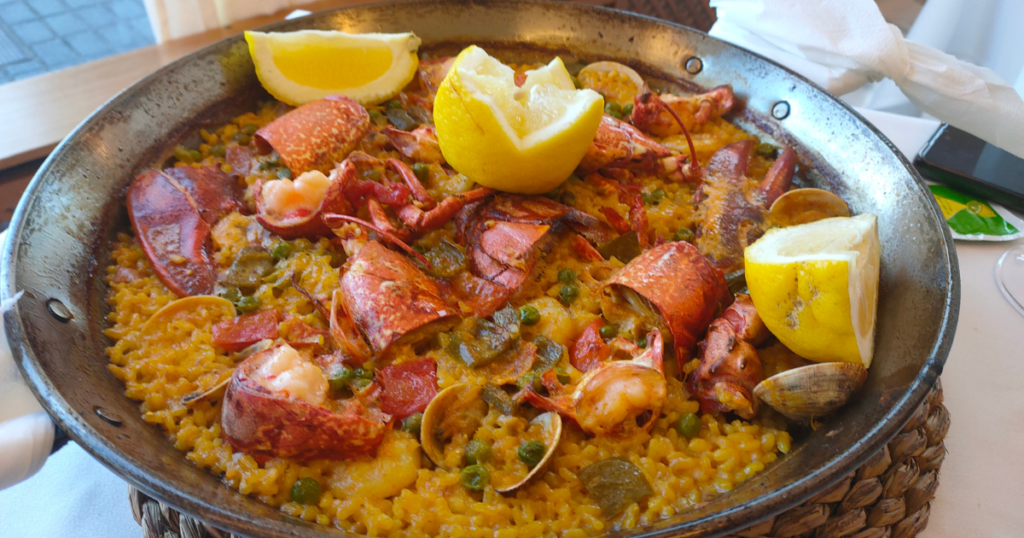
Planning a Paella Party involves more than choosing a menu. It’s about coordinating space, logistics, service flow, and live cooking.
This step-by-step guide walks you through the essential planning process so your first Paella Party runs smoothly.
Step 1: Define Your Event Goals and Guest Count
Start by clarifying the purpose of your event and the experience you want guests to have. A wedding, corporate event, or backyard gathering for a birthday party each requires a different level of formality, staffing, and menu complexity. Guest count is the most critical factor because it determines paella pan size, cooking setup, staffing, and overall cost.
For planning purposes, 20–40 guests typically require one medium pan and a small team, 50–150 guests need multiple pans and dedicated servers, and events with 150+ guests require full catering logistics. You should also decide whether the event will be indoor or outdoor, as outdoor setups are simpler for live cooking while indoor venues require ventilation and stricter safety planning.
Step 2: Choose the Right Venue and Layout
Paella is cooked live, so your venue must support open-flame cooking and guest movement. The cooking station should be visible enough to act as entertainment but positioned so it doesn’t block walkways or seating.
Key layout considerations:
- Outdoor space with a flat, stable surface
- Access to gas or electricity for burners and lighting
- Safe distance between guests and cooking equipment
- Clear crowd flow around the paella station
Weather contingency:
- Covered cooking area (tent, pergola, patio roof)
- Backup indoor serving plan in case of rain or wind
A thoughtful layout turns the cooking process into a focal point instead of a disruption.
Step 3: Select Your Paella Menu
Your menu should balance crowd appeal, dietary needs, and budget. Offering two or three paella varieties usually satisfies most guests without complicating execution.
Popular paella options:
- Classic seafood paella: shrimp, mussels, calamari, saffron rice
- Chicken and chorizo paella: hearty and cost-effective
- Vegetarian or vegan paella: seasonal vegetables and plant-based stock
- Mixed paella: combination of seafood and meats
Add-ons to complete the experience:
- Tapas, salads, artisan bread
- Desserts such as churros, flan, or cakes
- Wine, sangria, cocktails, and non-alcoholic beverages
Confirm dietary requirements early, including gluten-free, halal, and vegan options.
Step 4: Decide on Service Style
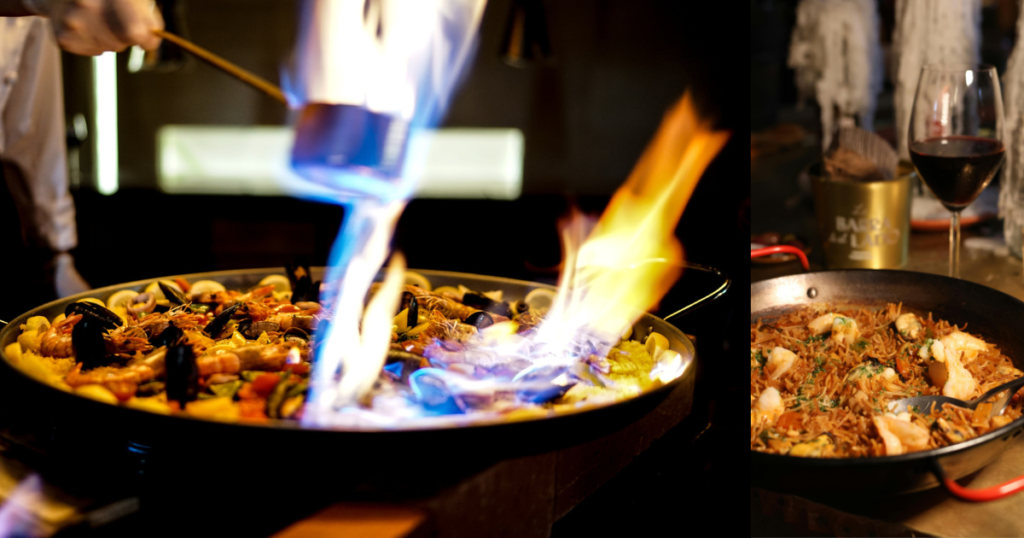
Service style affects staffing, rentals, and how guests interact with the food. Buffet service directly from the paella pan creates a casual, interactive atmosphere and works well for private parties. Plated service is better suited for formal weddings or VIP events where presentation and pacing matter.
Cocktail-style bowls are ideal for corporate mixers and networking events where guests are standing and mingling. Hybrid setups (such as buffet paella with passed appetizers) work well for large events that need both efficiency and premium touchpoints.
Step 5: Book a Paella Chef or Catering Team
Hiring an experienced paella chef is one of the most important decisions. Live paella requires specialized burners, large pans, and precise timing, so general caterers may not be equipped. Look for a team with proven experience in live paella events, proper equipment, permits, and food safety compliance. Ask about menu customization, tasting options, and staffing levels.
Your contract should clearly outline guest count pricing, setup and breakdown timing, staffing inclusions, cancellation terms, and weather policies. Book early, especially for weekends and peak seasons.
Step 6: Plan Rentals and Equipment
Even if the caterer provides cooking equipment, you may need additional rentals depending on the venue and service style.
Common rentals include:
- Tables, linens, plates, glassware, and utensils
- Chafing dishes or heat lamps for buffet holding
- Bar setup and beverage stations
- Lighting, speakers, or DJ equipment for evening events
Confirm what the caterer provides versus what you must rent to avoid duplication and budget surprises.
Step 7: Build Your Event Timeline
A detailed timeline keeps cooking, serving, and guest flow organized.
Typical 4-hour event timeline:
- Load-in and setup (2 hours before guests arrive)
- Guest arrival with drinks and appetizers
- Live paella cooking window
- Serving time (buffet or plated)
- Dessert and socializing
- Cleanup and breakdown after guests depart
Share this timeline with the venue and catering team to align logistics.
Step 8: Coordinate Staffing and Guest Flow
Staffing ensures smooth service and prevents crowding around the paella station. Typical roles include the paella chef and assistants, servers for buffet or plated service, bartenders, and an event coordinator. A general guideline is one server per 25–40 guests for buffet service and one server per 15–20 guests for plated events. Plan queue flow around the paella pans with clear signage or designated serving points to keep guests moving and avoid bottlenecks.
Step 9: Handle Permits, Safety, and Logistics
Live cooking requires basic compliance and safety planning.
Key considerations:
- Fire safety rules for open-flame cooking
- Local permits for outdoor events and food service
- Liability insurance from the caterer or venue
- Waste, recycling, and post-event cleanup plan
Check venue policies early, as some locations restrict open flames or require specific safety equipment.
Common Mistakes When Planning a Paella Party
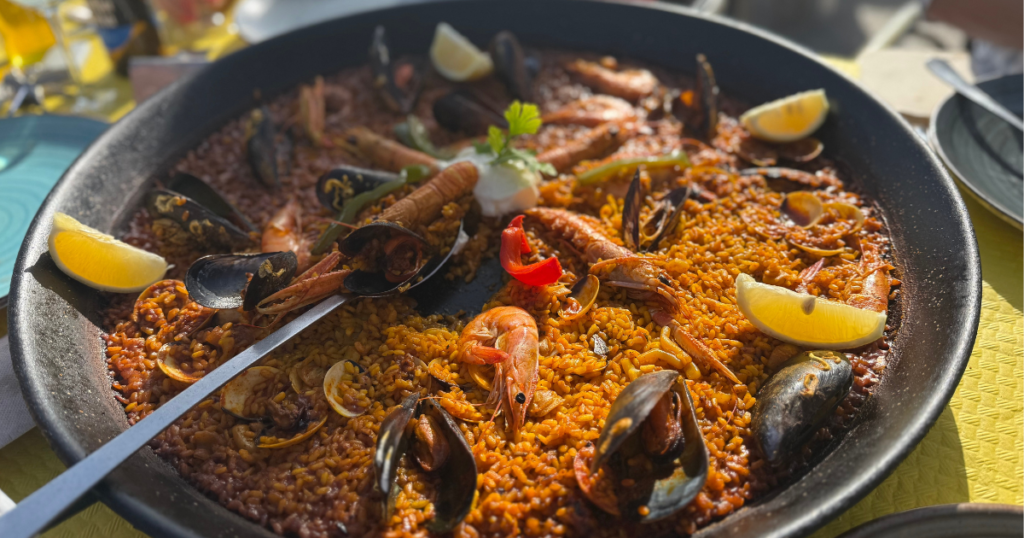
Even well-organized hosts can overlook key details when planning a Paella Party. Because live cooking adds moving parts, small missteps can affect food quality, guest flow, and overall experience. Avoid these common mistakes to keep your event smooth, safe, and memorable.
Do Not Underestimate Space and Crowd Flow
Paella cooking stations attract guests, which is great…but it can also create congestion. Hosts often underestimate how much space is needed for burners, prep tables, and safe guest circulation. The cooking area should have clear entry and exit paths, buffer zones for heat and equipment, and enough room for servers to move efficiently. Poor crowd flow leads to long lines, safety risks, and a less enjoyable guest experience.
Never Skip a Weather Backup Plan
Many Paella Parties are outdoors, and weather can change quickly. Not having a covered cooking area or indoor serving plan can delay cooking or compromise food quality. Always plan for rain, wind, or extreme heat with tents, patios, or alternative layouts. A weather contingency is especially critical for weddings and corporate events where schedules are tight.
Never Choose Too Complex a Menu
Offering too many paella varieties or add-ons can slow service and increase costs. Live cooking requires timing and coordination, so a focused menu performs better than an overly ambitious one. Two or three paella options plus simple sides usually deliver the best balance of variety, speed, and quality.
Not Confirming Power and Fuel Access
Paella burners require gas, and events often need electricity for lighting, music, and refrigeration. Assuming these utilities are available can lead to last-minute scrambling. Confirm gas supply, electrical outlets, and extension needs with your venue and caterer in advance to avoid setup delays.
Booking Too Late (Peak Season Issues)
Paella chefs and specialty caterers book up quickly, especially during wedding season and summer weekends. Waiting too long limits menu options, staffing availability, and pricing flexibility. Booking early also gives you time for tastings, customization, and coordination with the venue
How Much Does a Paella Party Cost
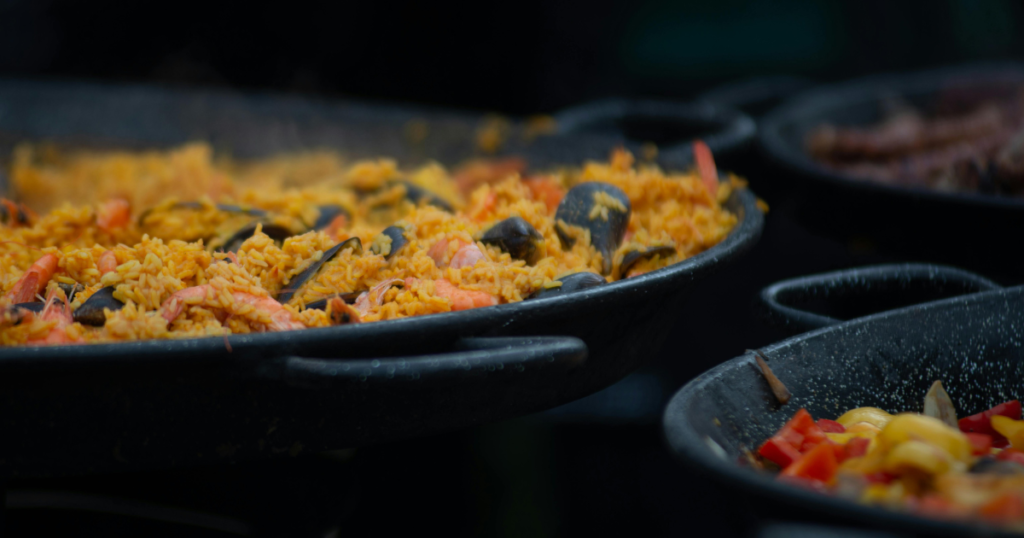
Paella Party pricing depends on guest count, menu scope, and logistics. Because live cooking includes chefs, equipment, and on-site service, it costs more than basic drop-off catering. The tradeoff is a premium, interactive experience that doubles as entertainment.
Cost Drivers
Guest count
More guests increase ingredient volume, pan size, staffing, and prep time. Large events may require multiple pans and chefs.
Menu complexity
Seafood, specialty proteins, and multiple paella varieties increase ingredient costs. Add-ons like tapas, dessert, or sangria raise per-person pricing.
Staffing
Live cooking requires a chef and often servers or bartenders. Higher-end service styles add labor costs.
Rentals
Tables, linens, plateware, tents, lighting, and beverage stations are often separate from catering fees.
Travel and permits
Travel fees, city permits, and fire safety requirements can affect outdoor events and festivals.
Typical Price Ranges
Small private events (12–40 guests)
Expect premium per-person pricing due to setup and staffing minimums. Many paella caterers charge around $70–$100 per person for live cooking, with minimum totals for very small groups.
Mid-size corporate events (40–150 guests
Per-person rates often stabilize because fixed costs spread across more guests. Pricing commonly ranges $60–$90 per person, depending on menu and staffing.
Large weddings and festivals (150+ guests)
Large-scale events benefit from volume efficiency but require extra staffing, logistics, and permits. Expect $55–$85 per person or custom quotes for multi-pan setups.
Ways to Optimize Your Budget Without Cutting the Experience
Simplify the menu
Choose one or two paella styles instead of multiple variations. Add a simple salad or bread instead of a full tapas spread.
Use buffet-style service
Serving directly from the paella pans reduces staffing needs while keeping the live-cooking spectacle.
Combine rentals
Bundle tables, linens, and plateware with your caterer or venue to reduce vendor coordination and delivery fees.
Limit add-ons strategically
Sangria, dessert, and pintxos elevate the event, but you can scale them based on guest profile and event goals.
You Might Have These Questions About Paella Party
A Paella Party works well for groups of 20 to 500+ guests. Smaller events feel intimate and interactive. Large events scale with multiple pans, chefs, and serving stations. The format is flexible and works for both private gatherings and big corporate or wedding events.
Yes, but outdoor setups are preferred. Live cooking uses open flame and large pans, so outdoor patios, backyards, and courtyards are ideal. Indoor events may need commercial ventilation, fire safety approvals, or a venue kitchen with proper infrastructure.
Cooking typically takes 60–90 minutes once the fire is lit. Setup usually starts 1–2 hours before guests arrive. Many hosts schedule the cooking window as part of the event so guests can watch and engage with the chef.
Yes. Most paella caterers offer vegetarian, vegan, seafood-free, and halal-friendly options. You can also request gluten-free menus and separate pans for allergy-sensitive guests.
Book 2–3 months in advance for peak seasons like summer weddings and corporate events. For large events or festivals, earlier is better. Small private parties may have more flexible availability.
Both are common. Buffet-style serving directly from the pan is popular and efficient. Plated service works well for formal weddings and corporate dinners where presentation and pacing matter.
Final Takeaway: Smart Planning = Wonderful Paella Party
A Paella Party is more than a meal. It is live fire, movement, and guests gathering around something happening in real time. Plan it with intention. Think about your space, your guest flow, and the kind of atmosphere you want people to remember. When the logistics are handled well, the food becomes the centerpiece instead of the stress point.Want to plan a live Paella Party that runs smoothly? Book a call with LivegreensPDX.