What’s the Ideal Kitchen Size for Home Cooking and Entertaining?
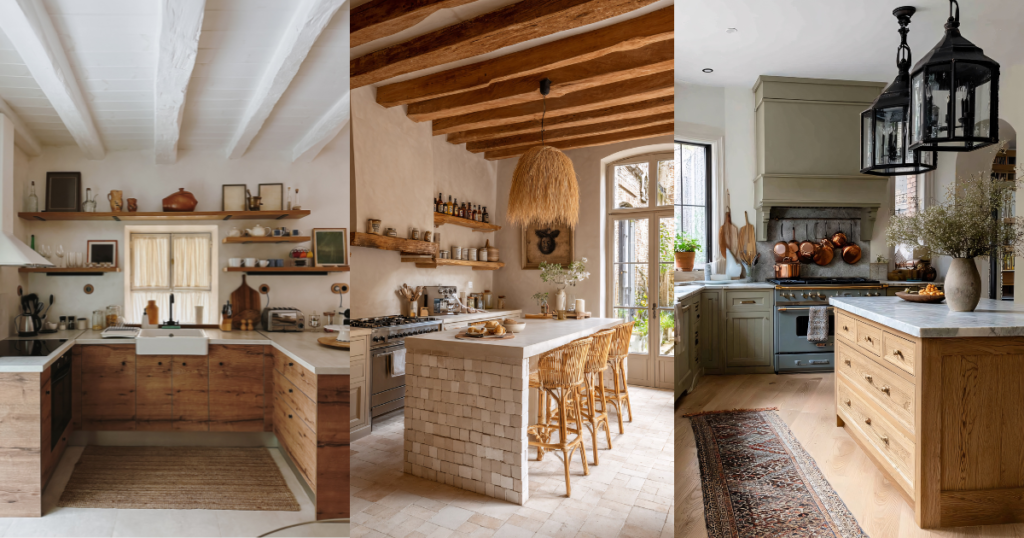
When our clients ask, “What’s the ideal kitchen size?”What they’re really trying to figure out is whether the kitchen will feel tight, work smoothly, and handle both everyday cooking and occasional entertaining.
The problem is that many people copy layouts, square footage, or cabinet dimensions without understanding how the space actually functions.
This blog breaks down the average kitchen size. You’ll learn average kitchen size ranges, smart space planning principles, and the practical dimensions for cabinets, sinks, islands, and trash storage.
What “Ideal Kitchen Size” Actually Means
An oversized kitchen with a poor layout can feel more frustrating than a smaller one designed correctly. “Ideal size” is about how well the space supports real use.
An ideal kitchen size is one that comfortably supports:
- Daily cooking without bumping into cabinets, appliances, or people
- Smooth movement and workflow between sink, stove, fridge, and prep areas
- Enough storage so counters stay clear and usable
- Entertaining needs, whether that’s casual family meals or hosting guests
This is why square footage alone is misleading. Two kitchens with the same dimensions can feel completely different. Clearance space, cabinet depth, island size, and appliance placement all affect how open or cramped a kitchen feels.
Average kitchen size gives a helpful reference point, but it’s only a starting line. What matters more is how the layout uses that space and how the components fit together.
Average Kitchen Size by Home Type (Realistic Benchmarks)
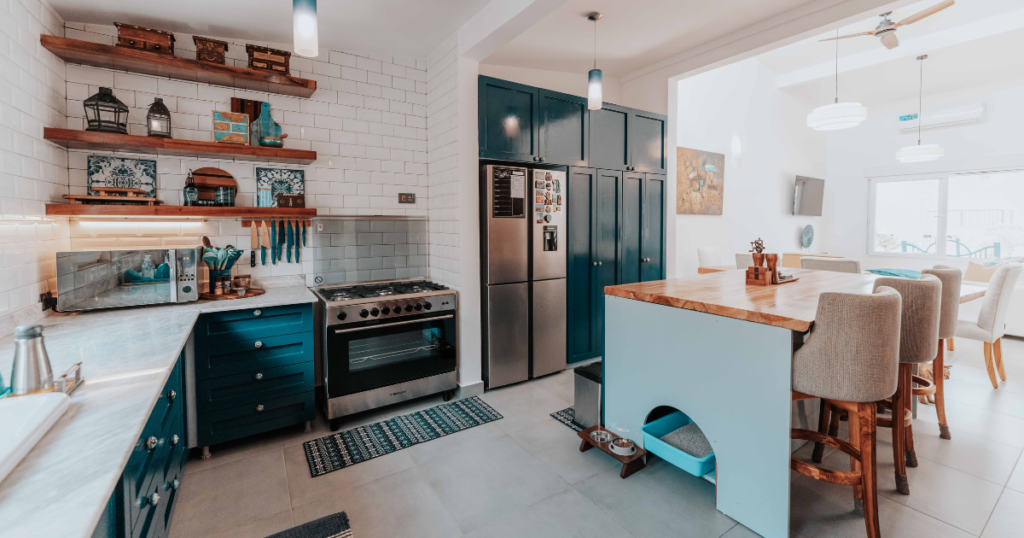
Average kitchen size varies widely by home type. These ranges aren’t rules. They’re functional reference points that help you understand what a kitchen of a certain size can comfortably support.
Apartments & Condos
Typical range: 70–120 sq ft
This size is built for efficiency, not entertaining.
What it realistically supports:
- One cook at a time
- Limited prep space with compact appliances
- No island; at most, a narrow movable cart
- Eating happens elsewhere (bar seating or nearby dining area)
These kitchens rely heavily on layout and cabinet efficiency. Storage and clearance matter more than total square footage.
Standard Single-Family Homes
Typical range: 150–250 sq ft
This is the most common “average kitchen size” in suburban homes.
What it realistically supports:
- One primary cook, with space for a second helper
- Full-size appliances and standard cabinet runs
- A small to medium kitchen island (or peninsula)
- Easy connection to a dining or breakfast area
At this size, workflow becomes more important than raw space. Poor island placement can make a 220 sq ft kitchen feel smaller than a well-designed 160 sq ft one.
Large or Open-Plan Homes
Typical range: 300+ sq ft
These kitchens are designed for both cooking and hosting.
What they realistically support:
- Multiple cooks working simultaneously
- Large islands with seating and storage
- Entertaining while cooking without crowding
- Seamless flow into dining and living spaces
Bigger kitchens add flexibility…but only if zones are clearly defined. Without that, extra space can actually slow movement.
Minimum Kitchen Size for Comfortable Home Cooking
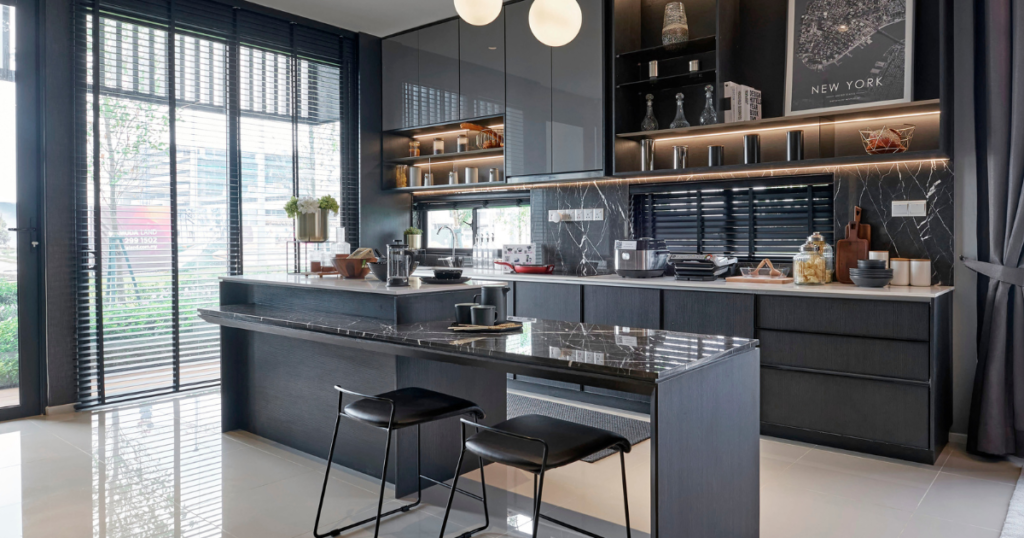
There’s no single “minimum kitchen size” that works for everyone. Comfort comes from clearance and flow, not just fitting cabinets into a room. A small kitchen can work well. A poorly spaced one fails fast.
Here’s what your kitchen must allow…regardless of square footage.
1. Appliance Clearance (Before You Think About Cabinets)
You need enough space to:
- Fully open the fridge, oven, and dishwasher without blocking walkways
- Stand in front of an open appliance and still move past it
If one open door shuts down the entire kitchen, the layout is too tight.
2. Safe Movement Between Zones
Cooking involves constant motion between:
- Sink → prep → stove → fridge
Tight kitchens fail when these paths overlap. Two people shouldn’t collide just because someone turns around.
3. Simultaneous Prep and Cooking
You should be able to:
- Prep food on a counter
- Cook on the stove
- Access the sink
…without shifting items every few minutes. That’s the real test of comfort.
Why “Correct” Cabinet Sizes Still Fail
Standard cabinets don’t guarantee a functional kitchen. Without proper aisle width and landing space, even well-sized components feel restrictive.
Kitchen Layout Matters More Than Size (Why Flow Wins)
Two kitchens can have the same square footage and feel completely different. The reason is the layout. Flow determines whether a kitchen feels efficient or exhausting, regardless of kitchen size.
Below is how common layouts change how space is used…and misused.
Galley Kitchens
Galley layouts place counters on two parallel walls. They can feel tight, but they’re often very efficient for one cook.
- Feels larger when work zones are clearly defined, and paths stay unobstructed
- Bottlenecks form when appliances face each other, and doors collide
- Best for focused cooking, not social movement
L-Shaped Kitchens
This layout opens up a corner and improves circulation.
- Feels larger when one leg handles cooking, the other prep and storage
- Bottlenecks form when traffic cuts through the work zone
- A strong balance between efficiency and openness
U-Shaped Kitchens
U-shapes maximize counter and storage space.
- Feels larger when there’s room to turn and work without backtracking
- Bottlenecks form when aisle widths are too narrow
- Excellent for serious cooking, weaker for entertaining
Open Kitchens
Open kitchens borrow space from adjacent rooms.
- Feels larger because sightlines extend beyond the kitchen itself
- Bottlenecks form when islands or seating interrupt circulation
- Entertaining kitchens prioritize movement around the cook, not through them
Bottom line: A well-planned layout makes a modest kitchen feel generous. A poor layout makes even a large kitchen frustrating.
Standard Kitchen Cabinet Sizes (And How They Affect Space)
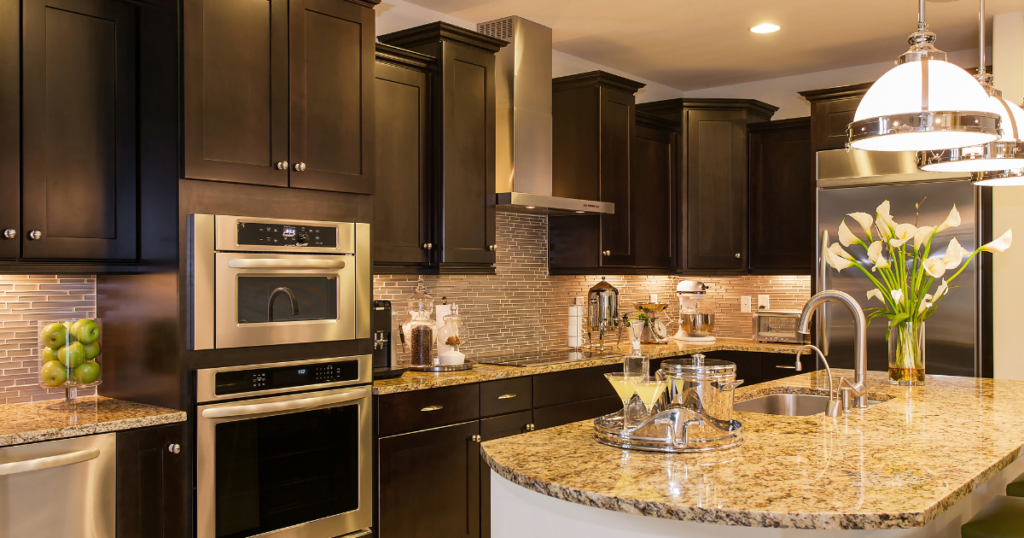
Cabinet dimensions quietly control how spacious…or cramped…a kitchen feels. Standard kitchen cabinet sizes exist for a reason: they balance storage, reach, and movement. But using them without understanding the impact is where kitchens fail.
Below is a practical breakdown of std kitchen cabinet sizes and how they influence space.
Base Cabinets
These form the working backbone of the kitchen.
- Standard depth: ~24 inches
- Standard height: ~34.5 inches (36 inches with countertop)
Why depth matters:
Deeper cabinets reduce aisle clearance. At 24 inches, most people can prep comfortably without leaning or twisting. Deeper-than-standard bases often hurt workflow more than they help storage.
Wall Cabinets
Wall cabinets affect both storage and how open the kitchen feels.
- Common heights: 30″, 36″, or 42″
- Typical depth: 12 inches
Ceiling-height vs. standard:
- Taller cabinets maximize storage but visually lower the ceiling.
- Shorter cabinets feel lighter but reduce capacity.
The right choice depends on ceiling height and how much daily-access storage you actually need.
Tall / Pantry Cabinets
These run floor to ceiling and replace multiple smaller cabinets.
- Best used when wall space is limited
- High storage return, but they visually “consume” space
- Work best grouped together, not scattered
Standard Kitchen Cabinet Sizes Chart (Quick Reference)
- Base cabinets: 24″ deep × 34.5″ high
- Wall cabinets: 12″ deep × 30–42″ high
- Tall cabinets: 24″ deep × full ceiling height
Kitchen Sink Sizes That Actually Make Sense for Daily Use
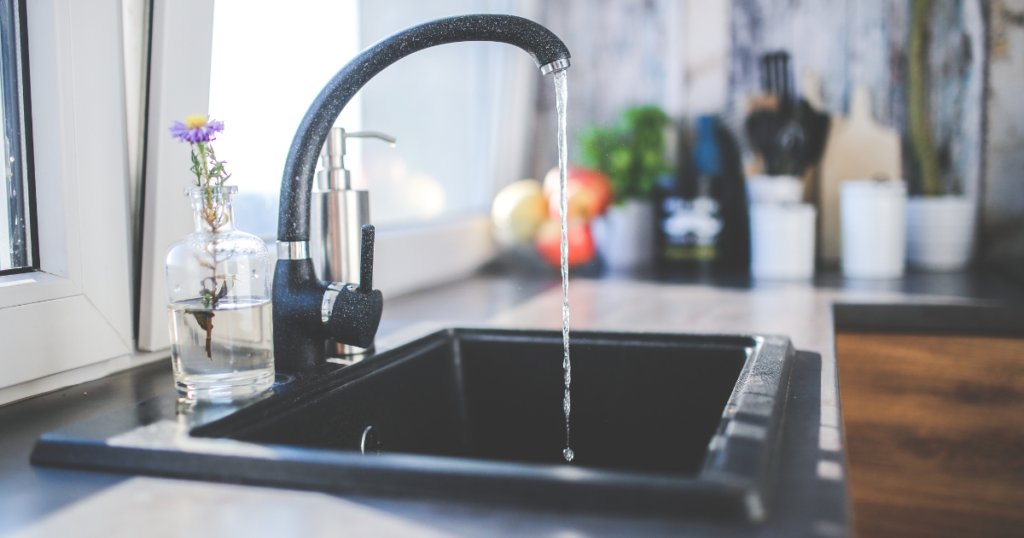
The sink is one of the most used zones in any kitchen, yet it’s often undersized. Choosing the right kitchen sink size affects prep flow, dishwashing speed, and post-meal cleanup far more than people expect.
Standard Kitchen Sink Size (What Most Homes Use)
Most residential kitchens are designed around a base cabinet that limits sink dimensions.
- Common sink width: 30–33 inches
- Typical bowl depth: 8–10 inches
- Standard cabinet compatibility: 36-inch sink base
These kitchen sink sizes and dimensions work well for daily cooking without overwhelming the counter layout.
Single Bowl vs. Double Bowl
Both work…but for different purposes;
- Single-bowl sinks
These sinks are easier to wash large pans and trays. They’re better for frequent cooking and batch prep. And the cleanup is faster in these bowls after entertaining.
- Double-bowl sinks
These sinks are useful for separating the wash and rinse. They can feel restrictive if bowls are shallow. Less flexible for oversized cookware
For most modern homes, a large single bowl supports better workflow.
Sink Depth vs. Cabinet Depth (A Critical Fit Check)
A deeper kitchen wash basin size holds more dishes, but must align with cabinet depth and plumbing clearance. Overly deep sinks can reduce under-sink storage or force awkward pipe routing.
How Usage Should Guide Size
- Cook daily? Go wider and deeper.
- Hand-wash often? Prioritize bowl width.
- Entertain regularly? Choose a sink that handles volume without stacking.
Kitchen Island Size (When It Helps & When It Hurts)
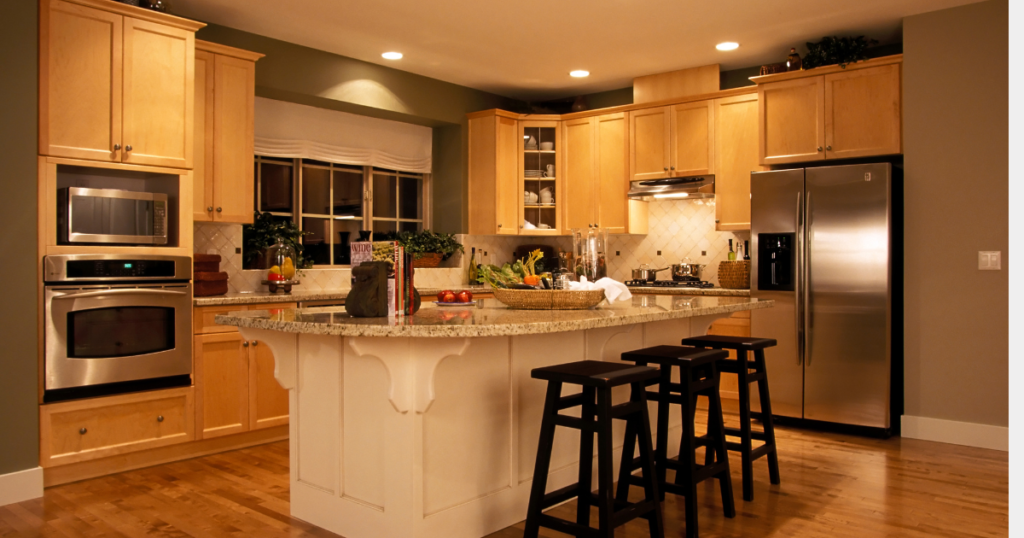
A kitchen island can improve prep space, storage, and social flow…but only if the kitchen island size fits the room. In the wrong space, an island doesn’t add function. It creates friction.
Minimum Clearance Around an Island
Clearance matters more than the island itself.
- 36 inches: Bare minimum for one cook and light traffic
- 42 inches: Comfortable for daily cooking
- 48 inches: Needed if multiple people cook or pass through
If you can’t maintain these clearances on all working sides, the island will feel like an obstacle.
The Common Mistake: Forcing an Island In
Many kitchens add islands because they look good in photos—not because the space supports them. In undersized kitchens, islands:
- Block appliance doors
- Interrupt prep-to-cook workflow
- Create traffic bottlenecks during entertaining
In these cases, perimeter counter space often performs better.
Island Sizes That Actually Work
- Prep-only island: ~24–30 inches deep
- Island with seating: 36–42 inches deep (to allow overhang)
- Length: 4–7 feet works for most homes without dominating the room
Seating vs. Prep: Pick One First
Seating-heavy islands favor socializing but reduce prep efficiency. Prep-focused islands support cooking but require nearby seating elsewhere.
Trash, Storage & Hidden Space That People Forget
Trash is one of the most used “appliances” in a kitchen…yet it’s often planned last. Poor trash placement breaks workflow, causes congestion, and forces unnecessary steps while cooking. Getting the kitchen trash can size and location right quietly improves efficiency every single day.
Why Trash Placement Matters
During prep, trash is used constantly…peels, packaging, wipes. If the bin is far from the main prep zone, you create extra movement and clutter. The most efficient kitchens place trash:
- Between the sink and the primary prep counter
- Close enough to open with one hand
- Out of the main traffic paths
This is why pull-out systems outperform freestanding bins.
Pull-Out Trash Base: Sizes That Actually Work
The best kitchen trash base size depends on household size and cooking frequency:
- 15-inch base: Single 30–35 qt bin (light cooking, small households)
- 18-inch base: Dual 30–35 qt bins (trash + recycling) — most common
- 21–24-inch base: Larger bins or compost separation (heavy cooking)
These bases require full cabinet-depth clearance and smooth slides to open fully.
Standard Kitchen Trash Can Sizes (If Not Built-In)
If you’re using a freestanding bin:
- Standard kitchen trash can size: 12–16 gallons
- Height matters—too tall blocks counters, too short forces bending
- Leave at least 24 inches of clearance to open lids comfortably
How to Decide the Right Kitchen Size for Your Home
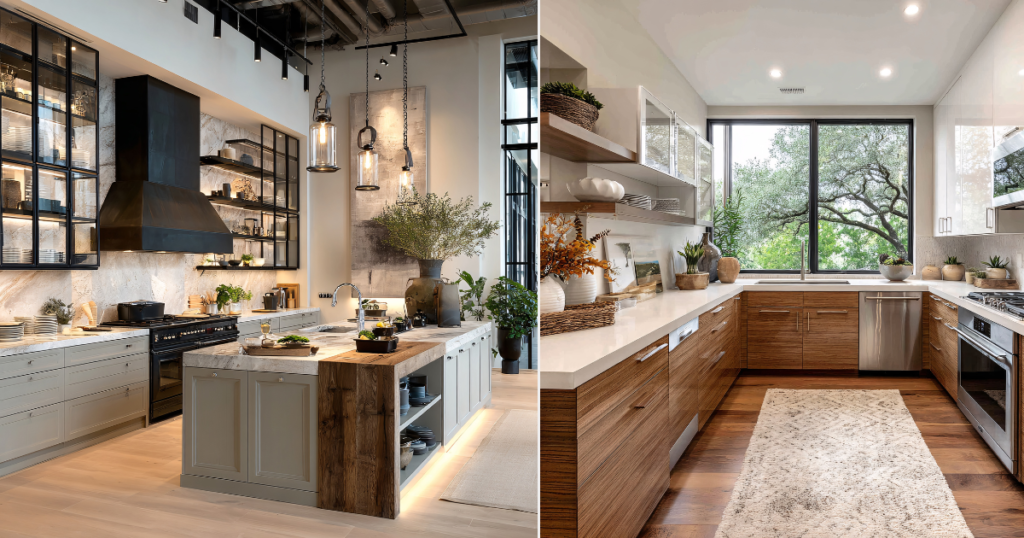
Use this 5-question checklist to make a practical decision:
1. How Often Do You Cook?
- Daily cooks need more prep space, storage, and appliance clearance.
- Occasional cooks can manage smaller kitchens if the flow is efficient.
2. How Many People Cook Together?
- One cook → galley or L-shape may suffice.
- Two or more → allow extra counter space, wider aisles, or a larger island to avoid collisions.
3. Do Guests Enter the Kitchen?
- Frequent entertaining requires open circulation and safe traffic zones.
- Kitchens for cooking-only can prioritize prep efficiency over flow.
4. Storage-Heavy or Appliance-Heavy?
- More storage → taller cabinets, deeper pantries, and careful cabinet sizing.
- Appliance-heavy → wider counter zones, proper outlet placement, and dedicated niches.
5. Remodel vs. New Build?
- Remodel → work within existing footprint, maximize clearance, and cabinet efficiency.
- New build → consider future-proofing: extra prep zones, island flexibility, and storage expansion.
Final Take: Ideal Kitchen Size = Effortless Cooking
The “right” kitchen size is about removing friction from daily routines. When aisles, cabinets, counters, and islands are sized for real use, cooking and hosting become effortless. A kitchen built for flow works quietly in the background, letting you focus on meals and people instead of space.
Consider planning with care or professional input to get it right the first time.
For effortless cooking, get in touch with LivegreensPDX.